



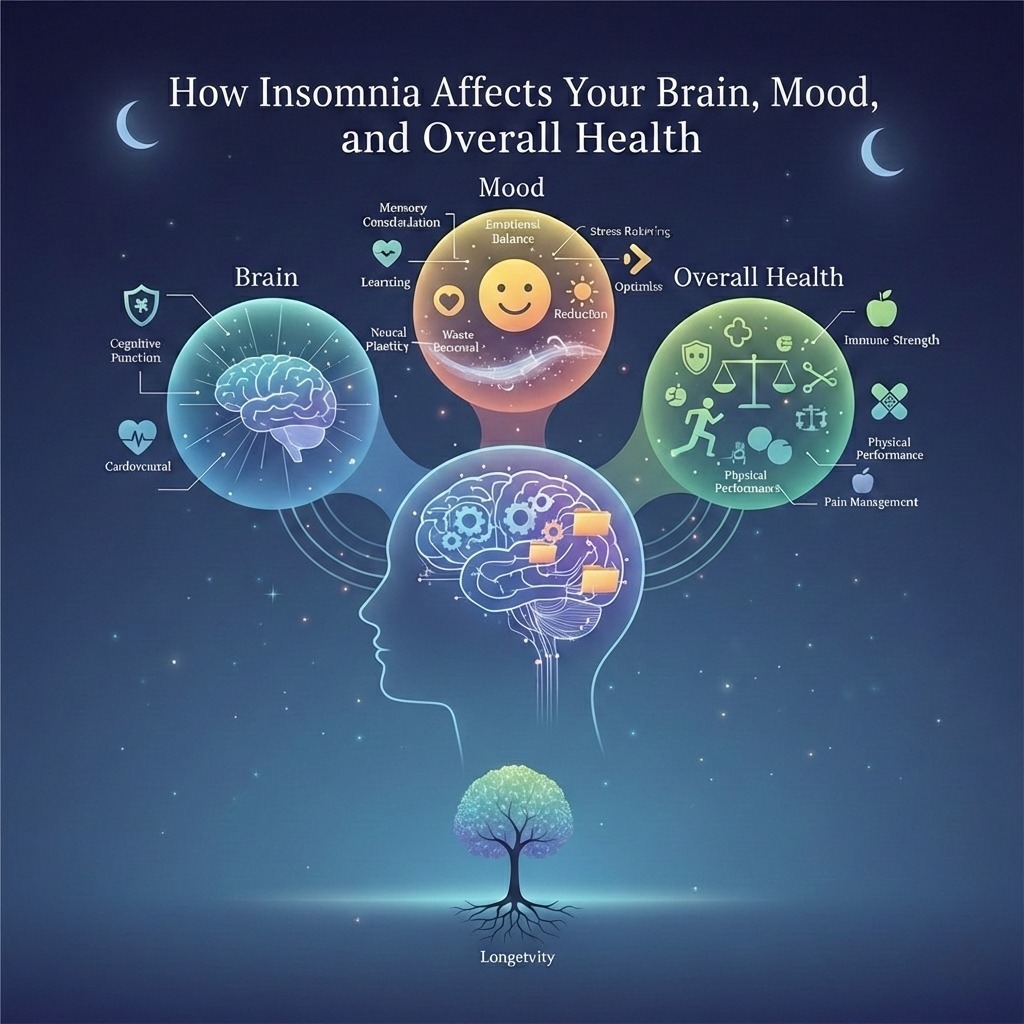
How Insomnia Affects Your Brain, Mood, and Overall Health
Table of Contents
There’s a particular kind of frustration that only shows up at night.
You’re tired, genuinely tired. Your body aches for rest. But as soon as the lights go off, your mind seems to power on. Thoughts wander. Small worries grow louder. Minutes stretch into hours. And then comes the clock-watching. The math of “If I fall asleep now, I’ll still get five hours…”
This is how insomnia feels for many people.
It isn’t just about missing sleep. It’s about lying awake while the rest of the world rests. And over time, insomnia doesn’t stay confined to nighttime. It starts to spill into your mornings, your work, your relationships, and your health.
Sleep is when the brain recalibrates and the body repairs. When that process is interrupted night after night, the effects of insomnia begin to surface, mentally, emotionally, and physically.
Let’s unpack what’s really happening.
What Is Insomnia?
Insomnia is the ongoing difficulty of falling asleep, staying asleep, or waking up too early and not being able to return to sleep. Almost everyone experiences a rough night occasionally. Insomnia is different because it repeats.
Sometimes it lasts a short while.
Other times, it lingers for months.
Acute vs. Chronic Insomnia
Short-term insomnia often shows up during stressful life events, deadlines, family problems, illness, travel, and big changes. It usually settles once the situation improves.
Chronic insomnia symptoms, however, occur at least three times per week for three months or longer. By then, sleep difficulty has often become a pattern rather than a reaction.
Why It Happens
There isn’t one single cause. Instead, insomnia tends to develop from layers of factors:
- Ongoing stress or overthinking
- Anxiety or low mood
- Irregular sleep schedules
- Late-night screen use
- Physical discomfort or pain
- Hormonal shifts
- Certain medications
Sometimes the trigger fades, but the sleep problem stays because the body has learned to associate bedtime with alertness instead of rest.
How Insomnia Affects Your Brain
The brain is not designed to function well without sleep. Even one poor night can make thinking feel slower. When insomnia becomes frequent, the impact becomes more noticeable.
Mental Clarity and Focus
After a bad night, concentration feels fragile. You may reread emails several times. Conversations require more effort to follow. Tasks that once felt automatic take longer.
This happens because sleep and brain health are closely tied. During deep sleep, the brain clears out waste products and strengthens neural connections. Without that reset, cognitive sharpness dulls.
Memory Gaps
Sleep is essential for memory consolidation. It’s when the brain organizes and stores what you learned during the day.
Without enough rest, details slip away. You might forget appointments, misplace items, or struggle to retain new information. These are common sleep deprivation effects.
Decision-Making and Judgment
Lack of sleep weakens the brain’s ability to regulate impulses and weigh consequences. That’s why sleep-deprived people may make decisions they later regret or feel unusually reactive.
Long-Term Brain Concerns
Researchers continue exploring how chronic sleep loss may influence long-term neurological health. While the science is still evolving, consistent poor sleep is increasingly recognized as a risk factor for cognitive decline over time.
The Emotional Toll: Insomnia and Mental Health
The connection between poor sleep and mental health is strong and often underestimated.
Anxiety and Low Mood
Insomnia can both contribute to and result from anxiety or depression when sleep becomes irregular, and emotional resilience drops. Problems feel bigger. Worries feel harder to quiet.
Over time, chronic insomnia symptoms may increase vulnerability to mood disorders.
Irritability and Emotional Sensitivity
After inadequate sleep, patience runs thin. You might notice yourself snapping at loved ones or feeling unusually tearful. Emotional balance becomes harder to maintain.
That’s because sleep loss amplifies activity in the brain’s emotional centers while reducing rational control.
Stress Hormones Stay Elevated
When you don’t sleep well, cortisol levels remain higher. Elevated cortisol keeps the body in a mild “fight or flight” state. And a body in survival mode does not fall asleep easily.
This is how insomnia can turn into a cycle: stress disrupts sleep, and lack of sleep increases stress.
Physical Health: The Hidden Impact
Many people think of insomnia as a mental struggle. But the body feels it too.
Immune Function Weakens
Sleep strengthens immune defenses. Without adequate rest, your body becomes more susceptible to infections.
Heart and Circulation
Persistent sleep deprivation effects include higher blood pressure and increased inflammation. Over the years, this may raise cardiovascular risks.
Weight and Metabolism
Insomnia alters hunger-regulating hormones. You may feel hungrier, crave sugar, or eat at irregular times. Metabolism also becomes less efficient.
Blood Sugar and Hormonal Balance
Sleep influences insulin sensitivity and overall hormonal regulation. Disrupted sleep patterns may increase the risk of metabolic disorders over time.
In short, sleep disorders are not isolated issues. They affect the entire system.
Factors That Can Make Insomnia Worse
Sometimes, habits unintentionally fuel the problem:
- Checking your phone in bed
- Drinking caffeine late in the day
- Using alcohol to induce drowsiness
- Sleeping in significantly on weekends
- Working or watching TV in bed
- Ignoring underlying medical conditions
Small patterns, repeated nightly, can quietly sustain insomnia.
Finding the Right Support for Better Sleep
When lifestyle adjustments don’t fully resolve insomnia, medical support may be considered.
In some cases, healthcare providers may prescribe medications such as Zopiclone tablets in Australia for short-term relief. These medicines work by calming specific brain activity to help initiate sleep.
However, conversations about buying zopiclone online in Australia should always include caution. Sleep medications are not meant for casual or unsupervised use. They require proper medical evaluation, correct dosing, and follow-up care to reduce risks like dependency or side effects.
Medication may provide temporary support, but it works best when paired with behavioral strategies and healthy sleep habits.
Insomnia Treatment Options and Healthy Sleep Habits
The good news is that insomnia is manageable with the right approach.
Cognitive Behavioral Therapy for Insomnia (CBT-I)
CBT-I addresses the thoughts and behaviors that keep sleep problems alive. It is widely recognized as one of the most effective long-term insomnia treatment options.
Relaxation Practices
Simple techniques like deep breathing, guided imagery, or progressive muscle relaxation can calm an overstimulated nervous system before bed.
Strengthening Healthy Sleep Habits
Consistency is powerful. Helpful strategies include:
- Going to bed and waking up at the same time daily
- Keeping the bedroom dark and cool
- Limiting screens before sleep
- Avoiding heavy meals late at night
- Creating a calming wind-down routine
These steps may seem small, but their combined effect can be significant.
When to Seek Professional Help
If insomnia continues for several weeks and begins affecting work, relationships, or health, consulting a healthcare provider is wise. Early intervention prevents deeper complications.
Frequently Asked Questions
1. What happens to your brain during insomnia?
The brain misses restorative processes that support memory, clarity, and emotional regulation, leading to mental fog and slower thinking.
2. Can insomnia cause depression?
Yes. Persistent sleep disruption increases vulnerability to depression and may worsen existing symptoms.
3. How long does insomnia last?
Short-term insomnia may resolve within weeks. Chronic insomnia lasts three months or longer.
4. Is chronic insomnia dangerous?
Long-term sleep deprivation may increase risks related to heart health, metabolism, and mental well-being.
5. Can poor sleep affect memory permanently?
Short-term memory issues are common. Severe, prolonged sleep loss may increase long-term cognitive risk.
6. What is the best treatment for insomnia?
CBT-I is considered highly effective. Medication may be used short-term when appropriate.
7. Are sleeping pills safe for long-term use?
Most are recommended only for temporary use under medical supervision.
8. How can I naturally improve sleep quality?
Maintain consistent routines, manage stress, reduce evening stimulation, and create a calming pre-sleep ritual.
Conclusion
Insomnia is more than a frustrating inconvenience. It affects your brain, disrupts your mood, and quietly strains your physical health. From impaired memory to increased stress hormones, the ripple effects touch nearly every system in the body.
But there is hope.
With the right combination of awareness, healthy sleep habits, behavioral therapy, and professional guidance when needed, insomnia can be managed effectively. Your brain is resilient. Your body wants balance.
Tonight doesn’t have to look like last night.
Small, consistent changes can restore restful sleep, and with it, clearer thinking, steadier emotions, and stronger overall health.

Author: Darwin
Darwin has spent the better part of a decade writing about sleep problems and the medications used to treat them. Based in Melbourne, he’s become something of a specialist in explaining pharmaceutical information to ordinary Australians who just want a decent night’s rest…Read more