



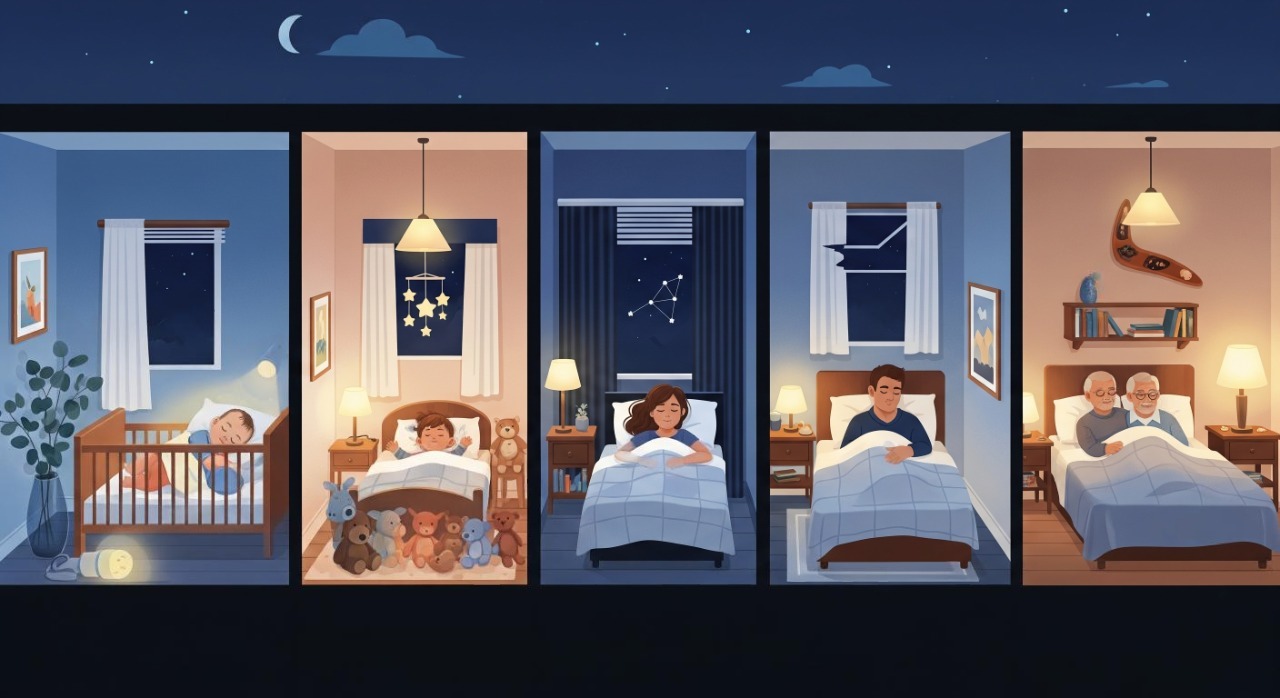
Best Sleep Schedule Strategies for Different Age Groups
Look, I’m not going to sugar-coat this – getting everyone in your house to sleep properly is bloody hard work. My mate Sarah’s got a two-year-old who thinks 4 am is breakfast time, while her teenage son won’t roll out of bed before noon on weekends. Sound familiar?
The thing is, there’s no magic bullet when it comes to the Best Sleep Schedule. What works for my neighbour’s family might be a complete disaster for yours. But after years of trial and error (and way too many 3 am Google searches about toddler sleep), I’ve picked up some tricks that actually work.
Why Everyone’s Sleep Needs Are Different
Your gran probably told you “early to bed, early to rise,” but here’s the reality – our sleep patterns change massively throughout life. It’s not laziness or stubbornness; it’s actual science.
Babies have no bloody clue about day and night when they first arrive. Teenagers aren’t just being difficult when they want to stay up till midnight – their brains literally produce sleep hormones later than ours. And your parents aren’t being awkward when they start waking up at dawn without an alarm clock.
Once I understood this stuff wasn’t personal, everything got easier. Fighting biology is exhausting. Working with it? Much more doable.
The Baby and Toddler Years: Survive
Anyone who tells you they had their newborn in a perfect sleep routine from day one is either lying or incredibly lucky. Those first few months are about survival, not schedules.
My daughter didn’t sleep longer than three hours at a stretch for the first four months. I remember googling “can you die from sleep deprivation” at 2 am while she screamed in my arms. The answer’s no, by the way, but you’ll feel like you might.
Around two months, you can start introducing some patterns – nothing fancy – just helping them figure out day from night. Keep daytime feeds chatty and bright, nighttime feeds boring and dim. I used to sit in near-darkness during those middle-of-the-night feeds, barely speaking. It felt weird at first, but it worked.
By their first birthday, most kids can handle a proper bedtime routine. Bath, story, cuddles – whatever works for your family. The secret isn’t what you do, it’s doing it the same way every night. Kids love knowing what comes next.
Don’t panic when things go backwards. Around 18 months, my previously perfect sleeper started waking up every two hours again. Turned out she was going through a developmental leap. It sorted itself out within a couple of weeks, but those weeks felt like months.
School Kids: Getting Serious About Sleep
Once kids start school, sleep becomes crucial. A tired six-year-old trying to learn phonics is not a pretty sight. Trust me, I’ve been there.
School-age kids need about 9-11 hours of sleep. Do the maths backwards from when they need to get up. If school starts at 9am and they need an hour to get ready, they’re up at 8am. For proper sleep, they should be out cold by 9 pm at the latest.
The tricky bit is our Australian summers when it’s still light at 8pm. Blackout curtains became my best friend. Cheap ones from Kmart work fine – you don’t need to spend a fortune.
Screens are the biggest pain in the backside at this age. That iPad might keep them quiet during dinner prep, but the blue light messes with their sleep hormones. We made a rule: no screens an hour before bed. There were tantrums initially, but now it’s just normal.
Create a proper sleep cave – dark, cool (around 18-20 degrees works in most Aussie homes), and quiet. If you’re near a main road, a cheap fan for white noise can work wonders.
Teenagers: Pick Your Battles
This is where most parents throw in the towel, but stick with me. Teenagers aren’t just being difficult about bedtime – their biology genuinely shifts during puberty. Their brains don’t start producing sleepy hormones until around 11 pm.
My son used to argue he wasn’t tired at 9 pm, and you know what? He genuinely wasn’t. Fighting about it just created stress for everyone.
Here’s what worked: slight flexibility on weekends, firm boundaries on school nights. We allowed him to stay up an hour later on Fridays and Saturdays, but Sunday to Thursday was non-negotiable.
Get them to understand why sleep matters for stuff they care about. For my son, it was footy performance. Once he realised poor sleep was affecting his game, he became more cooperative.
Practical stuff that helped: keeping his room cool, charging his phone in the kitchen overnight (this one caused World War Three initially but was worth it), and getting him a sunrise alarm clock. Those gradual wake-up lights made mornings less brutal for everyone.
Adult Sleep: Juggling Everything
Adult sleep should be straightforward – we know what we need to do. But between work deadlines, kids’ activities, ageing parents, and trying to maintain some sort of social life, getting 7-9 hours becomes impossible.
I learned the hard way that treating sleep as optional doesn’t work. When I started saying no to evening commitments that would wreck my sleep, my whole life improved. Sounds dramatic, but it’s true.
Work boundaries matter, especially if you work from home like I do. I used to check emails right up until bedtime, then wonder why my brain wouldn’t switch off. Now I have a hard cutoff at 8 pm. The emails will still be there tomorrow.
Stress is the biggest adult sleep killer. Find what works for you – exercise, meditation, calling your mum, whatever. I started doing ten minutes of deep breathing before bed. Felt ridiculous at first, but it actually helps.
Watch your coffee timing. That 3 pm flat white might still be buzzing around your system at bedtime. I switched to decaf after 2 pm and noticed a real difference.
Alcohol’s tricky. A glass of wine might make you drowsy, but it often leads to rubbish sleep quality. If you’re drinking, finish at least three hours before bed.
Seniors: Adapting to Changes
My mum started waking up at 5 am every day when she hit 70. She thought something was wrong, but it’s actually pretty normal. Sleep patterns genuinely change as we age.
Older adults often need less total sleep – around 7-8 hours – but they need it to be good quality. Light sleep and frequent wake-ups become more common.
Physical comfort becomes more important. Mum invested in a really good mattress and some extra pillows for positioning. Made a huge difference to her joint pain and sleep quality.
Morning light exposure helps heaps. Even fifteen minutes outside with a cup of tea can help regulate sleep patterns that might be getting wonky.
Stay active during the day, but not too close to bedtime. Mum does water aerobics in the mornings and reckons it helps her sleep better at night.
Short afternoon naps are fine – 20-30 minutes max before 3pm. Any longer or later, and they’ll mess with nighttime sleep.
Shift Workers: The Real Challenge
My brother’s a nurse, so I’ve seen firsthand how tough shift work can be on sleep. If you’re working against your natural body clock – whether in healthcare, emergency services, or mining – you need special tactics.
Try to keep consistent sleep times even on days off. I know it’s tempting to flip back to “normal” hours, but it makes the next shift change brutal.
Light management is crucial. Wear sunnies on the drive home from night shifts, use blackout curtains or eye masks for daytime sleep, and consider one of those light therapy boxes when you’re switching between different shifts.
Tell your family when you’re sleeping. My brother puts a sign on his door and turns his phone off. Sounds obvious, but it took him ages to actually do it consistently.
Setting Up Your Sleep Space
Whatever your age, certain basics help everyone sleep better. Keep bedrooms cool, dark, and quiet. I know it sounds boring, but it works.
Get decent curtains or blinds – especially important in Australia, where summer daylight goes on forever. You don’t need expensive ones; just something that blocks light properly.
Remove anything that glows. Phone chargers, digital clocks, that little light on the TV – they all mess with your sleep hormones more than you’d think.
Keep the bedroom for sleep and intimacy only. No working in bed, no eating, no watching Netflix. Your brain needs to associate that space with sleep.
Read More: For more comprehensive information about sleep disorders and healthy sleep habits, the Sleep Health Foundation Australia provides excellent resources tailored specifically for Australian families.
Food and Drink Timing
Heavy meals close to bedtime are asking for trouble. I learned this the hard way after a massive curry kept me awake all night. Finish eating at least three hours before bed.
If you’re genuinely hungry before sleep, keep it light. Banana with a bit of peanut butter works well, or some toast with honey.
Stay hydrated during the day, but ease off the fluids a couple of hours before bed. Nothing worse than being woken up by your bladder every few hours.
When to Get Help
Sometimes nothing you try works, and that’s when it’s time to talk to a professional. Don’t struggle with thinking it’ll sort itself out.
Red flags include loud snoring (could be sleep apnoea), persistent insomnia for more than a month, or if sleep problems are seriously affecting your daily life.
My neighbour ignored her husband’s snoring for years before finally making him see a doctor. Turned out he had severe sleep apnoea – now he uses a CPAP machine and they both sleep properly for the first time in decades.
Frequently Asked Questions
1. How long before new sleep routines actually stick?
About 3-4 weeks, in my experience, though you might see some improvement within the first week. Don't chuck it in if things feel hard initially – persistence really does pay off.
2. My teenager wants to sleep till noon on weekends. Should I let them?
A bit of weekend sleep-in is normal for teens, but I'd limit it to about two hours past their weekday wake-up time. Any more and Monday mornings become absolutely brutal.
3. My toddler was sleeping brilliantly, but now wakes up crying every night. What's going on?
Probably a sleep regression linked to developmental change,s or maybe they're getting sick. Stick to your usual routine, offer comfort, but don't start new habits you'll regret later. Usually sorts itself within a couple of weeks.
4. Is it okay for older people to nap during the day?
Short naps before 3pm are usually fine – about 20-30 minutes max. Any longer or later, and it might mess with nighttime sleep. My mum has a quick kip after lunch and sleeps fine at night.
5. I work night shifts. Can I ever have normal sleep?
Define normal! You can definitely have healthy sleep patterns, they just won't look traditional. Keep consistent sleep times when possible, manage light exposure cleverly, and don't feel guilty about sleeping when others are awake.
6. How do I help my family adjust when the clocks change?
Start shifting bedtimes gradually a few days early – maybe 15 minutes each day. Get morning sunlight and dim evening lights to help everyone's body clocks adjust more smoothly.
7. Should adults nap if they're knackered during the day?
Quick power naps (20-30 minutes) before 3pm can be brilliant for alertness. But if you're having trouble sleeping at night, skip the daytime naps and focus on fixing your nighttime sleep instead.
8. When should I actually worry about sleep problems?
If sleep issues persist for over a month despite trying proper sleep habits, if someone snores really loudly or stops breathing during sleep, or if daytime life is seriously affected. Kids who seem constantly tired despite enough sleep time should also see a doctor.
Making It Work for Your Family
Here’s the truth nobody tells you: there’s no perfect sleep system that works for every family. You’ll need to experiment, adjust, and probably start over a few times.
Start small. Don’t try to overhaul everyone’s sleep at once – that’s a recipe for disaster. Pick one thing and stick with it for at least a month before trying something else.
Be patient with the process. It takes most people 3-4 weeks to settle into new sleep habits. Don’t give up after a few rough nights.
Most importantly, be realistic about what’s possible for your family right now. If you’ve got a newborn, survival mode is fine. If you’re caring for elderly parents while working full-time, perfect sleep routines might not be feasible. Do what you can, when you can.
The Best Sleep Schedule is ultimately whatever works consistently for your family’s current situation. It might not look like what works for your mate’s family or what you read about online, but if everyone’s getting reasonable sleep most of the time, you’re winning.
Sleep affects everything – mood, health, relationships, work performance, and parenting patience. It’s not selfish to prioritise it; it’s essential. Here’s to everyone in your house actually sleeping through the night – eventually.

Author: Darwin
Darwin has spent the better part of a decade writing about sleep problems and the medications used to treat them. Based in Melbourne, he’s become something of a specialist in explaining pharmaceutical information to ordinary Australians who just want a decent night’s rest…Read more