



Common Insomnia Treatment Mistakes and How to Avoid Them
Look, I’ll be straight with you – I’ve spent way too many nights staring at the ceiling, wondering why the hell I can’t just fall asleep like a normal person. And after years of trial and error (mostly error), I’ve realised that most of us are getting insomnia treatment completely wrong from the start.
The thing is, we’re all making the same bloody mistakes when it comes to fixing our sleep. I see my mates doing it, I’ve done it myself, and chances are you’re probably doing at least a few of these things too. But here’s the good news – once you know what these mistakes are, you can actually do something about them.
Chasing the Magic Bullet
Right, let’s start with the big one. We all want that one perfect solution that’ll fix everything overnight. I get it – you’re exhausted, cranky, and you just want to sleep properly again. So you grab some melatonin from the chemist, or maybe you try that fancy pillow spray your sister swears by.
When that doesn’t work after a couple of nights, you’re onto the next thing. Maybe it’s magnesium tablets this time, or a white noise app, or those blue light blocking glasses you saw advertised on Instagram.
But mate, sleep doesn’t work like that. Your brain isn’t going to suddenly flip a switch because you took a supplement. Real change happens gradually, and you need to stick with something for at least a month before you can honestly say whether it’s helping or not.
I learned this the hard way after spending a fortune on sleep gadgets that are now gathering dust in my bedside drawer. Pick one or two things and actually commit to them properly.
Treating Your Bedroom Like a Lounge Room
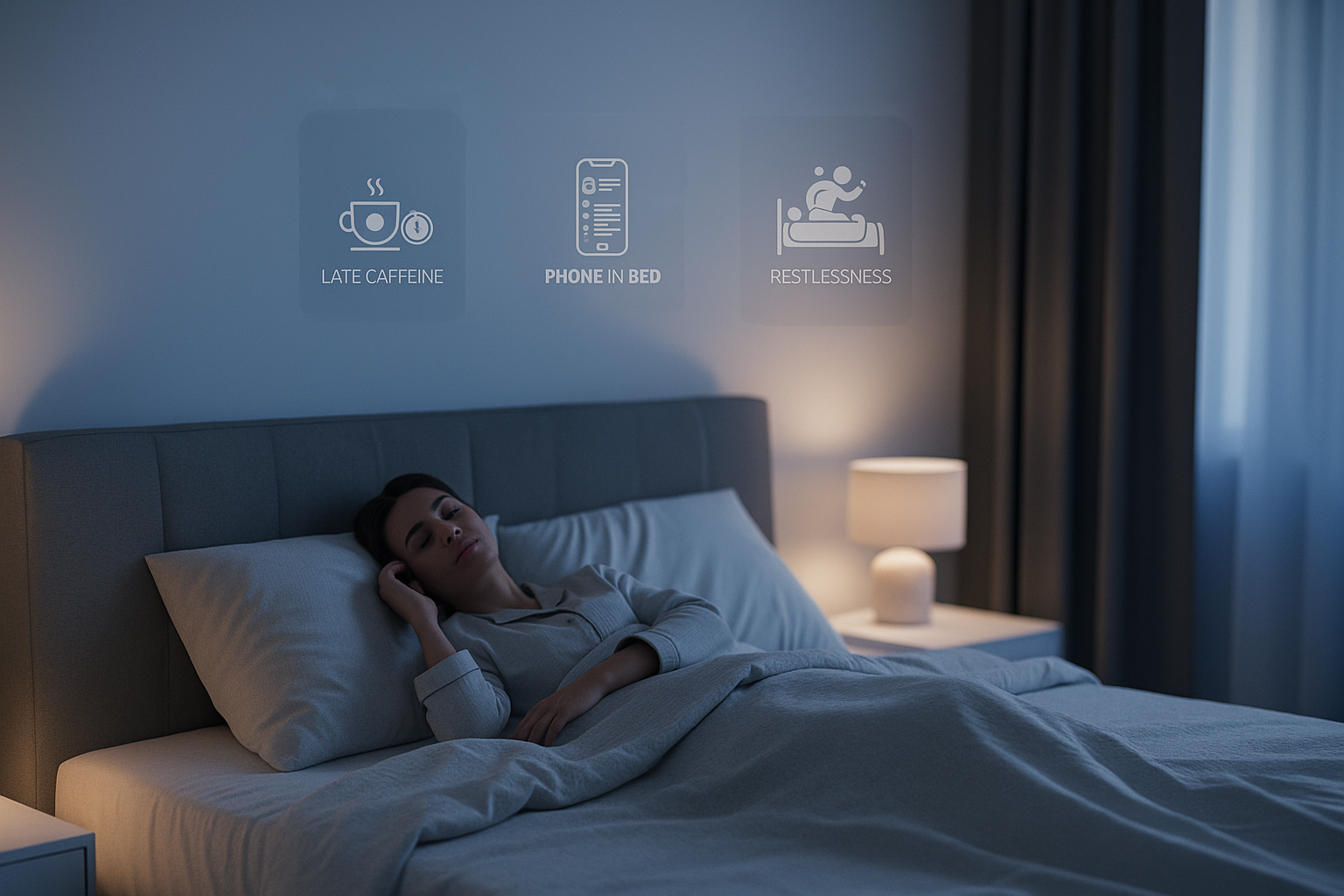
Your bedroom probably looks like mine used to – laptop on the bed, phone charging next to your pillow, maybe a TV mounted on the wall. We’ve turned our bedrooms into entertainment centres and then wonder why we can’t switch off when it’s time to sleep.
Your bedroom should be boring. Seriously. It should be dark, cool, and quiet. That’s it.
I had to move my TV to the lounge room, which felt like giving up a limb at first. But within a week, I noticed I was actually reading before bed instead of falling asleep to Netflix. My brain started associating my bedroom with sleep rather than entertainment.
The temperature thing is huge too. I used to sleep with my window closed because I didn’t want to hear the neighbour’s dog, but I was basically turning my room into a sauna. Now I use earplugs and crack the window – the cool air makes such a difference.
The Afternoon Coffee Habit
This one really got me. I knew not to drink coffee before bed, obviously. But I had no idea that my 3 PM flat white was still buzzing around my system at 10 PM.
Caffeine sticks around for ages – like, way longer than you’d think. That afternoon coffee you have to get through the post-lunch slump? It’s still working when you’re trying to wind down for the night.
I started cutting myself off at midday and honestly thought I’d die of tiredness for the first week. But then something weird happened – I stopped needing that afternoon coffee because I was actually sleeping properly at night.
Energy drinks are even worse. My nephew was wondering why he couldn’t sleep, and it turned out he was having a Red Bull at 4 PM every day after footy training. The kid was basically taking speed and then expecting to sleep eight hours later.
Weekend Sleep-Ins Are Sabotage
Friday night rolls around, and you think, “Beauty, I can finally catch up on sleep.” So you stay up until 2 AM binge-watching shows, then sleep until 11 AM on Saturday. Feels good, right?
Wrong. You’ve just messed with your body clock something fierce.
Your brain doesn’t understand weekends. It just knows that you went to bed at different times and woke up at different times, so it gets confused about when it’s supposed to make you feel sleepy.
I used to be the worst for this. Friday and Saturday nights, I’d be up until all hours, then wonder why I felt like rubbish on Monday morning. Now I stick to roughly the same bedtime every night, even on weekends. Yeah, it’s a bit boring, but I actually feel human on Monday mornings now.
Phone Scrolling Before Bed
We all do it. You get into bed, set your alarm, and then “just quickly” check Instagram. Three hours late,r you’re watching TikTok videos about conspiracy theories and your brain is absolutely wired.
The blue light thing is real, but honestly, I think the content is worse than the light. You’re filling your head with other people’s drama, news that makes you angry, or random information that gets your mind racing.
I had to physically move my phone charger to the kitchen. First few nights I kept reaching for it out of habit, but now I actually read books before bed like some kind of civilised human being.
Get yourself a proper alarm clock – one of those old-school ones that just tells the time. Your phone doesn’t need to sleep next to you.
Turning Sleep Into a Performance
This is where things get really twisted. You start monitoring everything – how long it took to fall asleep, how many times you woke up, what your sleep score was according to your fitness tracker.
Before you know it, you’re lying there calculating how many hours you’ll get if you fall asleep right now, watching the minutes tick by, getting more stressed about not sleeping, which makes it even harder to sleep.
I had a mate who was so obsessed with his sleep tracking app that he was staying awake worrying about his sleep data. Mental, right?
If you can’t fall asleep within half an hour, get up and do something boring. Read a book, do some gentle stretches, or just sit quietly. Don’t lie there torturing yourself about it.
Pills as the First Option
Look, sleeping pills have their place, but too many people reach for them before trying anything else. Your GP writes you a script, you take it for a few weeks, and yeah, you sleep. But you’re not actually fixing the problem.
When you stop taking them, guess what? The insomnia comes right back because you haven’t changed any of the habits that were keeping you awake in the first place.
Plus, your body gets used to them pretty quickly, so you need higher doses to get the same effect. I’ve seen people get properly stuck on sleeping pills when they could have sorted their sleep out with some basic lifestyle changes.
If you’re already taking them, don’t just stop cold turkey – talk to your doctor about tapering off while you work on other stuff. But don’t make pills your long-term solution.
Read More: Australia’s Sleep Health Foundation has comprehensive guidance on insomnia
Ignoring the Real Problem
Sometimes you can’t sleep because there’s actually something else going on. Maybe you’re stressed about work, your relationship’s rocky, or you’re dealing with anxiety that gets worse at night when everything’s quiet.
You can have perfect sleep hygiene, the ideal bedroom setup, and all the supplements in the world, but if you’re lying there worrying about your mortgage or replaying an argument you had with your boss, you’re not going to sleep well.
I spent months trying to fix my sleep with better habits when really I needed to deal with the work stress that was keeping my mind racing at night. Sometimes you need to tackle the bigger picture, not just the symptom.
If there’s stuff going on in your life that’s weighing on your mind, that needs to be part of your sleep strategy too.
Frequently Asked Questions
Q1: How long should I expect to wait before seeing real improvements?
A: Give it at least three to four weeks before you judge whether something's working. Your sleep patterns have probably been messed up for months or years, so they won't fix themselves overnight. I noticed small changes within the first week, but it took about a month before I felt like I was consistently sleeping better.
Q2: What if my sleep gets worse when I first start making changes?
A: Yeah, this can happen, especially if you're cutting out caffeine or changing your sleep schedule dramatically. Your body might rebel against the changes for the first week or two. Push through it unless things are getting really bad - then maybe ease into the changes more gradually.
Q3: Should I nap during the day if I had a shocking night's sleep?
A: Try not to, even though you'll feel like death. If you absolutely have to nap, keep it under 20 minutes and make sure it's before 3 PM. It's better to feel tired during the day and then sleep properly that night than to get stuck in a cycle of bad nights and daytime naps.
Q4: Do those fancy sleep apps and gadgets actually help?
A: Some people find them useful, but honestly, most are just expensive distractions. Focus on the basics first - good sleep habits don't cost anything. If you want to try an app, go for something simple like a meditation or white noise app rather than complicated sleep tracking systems.
Q5: How much does what I eat affect my sleep?
A: More than you'd think. Heavy meals, spicy food, or too much alcohol before bed can definitely mess with your sleep. I try not to eat anything major for at least three hours before bed, and I've cut way back on alcohol because it makes my sleep really fragmented.
Q6: Is it worth seeing a doctor about sleep problems?
A: If you've been struggling for more than a month and basic changes aren't helping, definitely yes. There could be underlying issues like sleep apnoea or hormone problems that you can't fix with lifestyle changes alone. Don't just suffer through it, thinking you need to toughen up.
Q7: What's the deal with melatonin - does it actually work?
A: It can help some people, especially with jet lag or shift work, but it's not a magic cure for chronic insomnia. The timing matters a lot too - you need to take it at the right time for your body clock, not just when you want to feel sleepy. Chat to a pharmacist about whether it might help your specific situation.
Q8: How do I deal with racing thoughts when I'm trying to fall asleep?
A: This was my biggest problem. I started keeping a notepad next to my bed to write down anything important that popped into my head, which helped stop my brain from cycling through the same thoughts. Deep breathing exercises work too - focus on making your exhale longer than your inhale. If your mind is still going crazy after 30 minutes, get up and do something boring until you feel sleepy again.
What Actually Works
After a lot of trial and error, here’s what truly helped me improve my insomnia treatment. Keeping a consistent bedtime and wake-up time — even on weekends — made a huge difference. I also made my bedroom cool, dark, and screen-free, avoided caffeine after midday, and built a proper wind-down routine without my phone.
The biggest shift was changing my mindset. I stopped treating sleep like a problem to fix and started treating it like a skill to develop. Just like you can’t get fit after one gym session, you can’t expect perfect sleep after one good night.
Start small — make one or two changes and stick with them for at least a month. Don’t try to overhaul everything at once; it only leads to overwhelm and giving up.
And if you’ve tried everything and still struggle, there could be an underlying medical issue — like sleep apnoea, restless legs, or hormonal imbalances. Don’t suffer in silence, thinking you just need to “try harder.”
Good insomnia treatment isn’t about magic tricks or expensive gadgets. It’s about creating the right conditions, being consistent, and giving your body time to adjust. Once you stop making common mistakes and stay patient, your sleep can improve dramatically — and trust me, it’s worth the effort.

Author: Darwin
Darwin has spent the better part of a decade writing about sleep problems and the medications used to treat them. Based in Melbourne, he’s become something of a specialist in explaining pharmaceutical information to ordinary Australians who just want a decent night’s rest…Read more