


The Role of Zopiclone Tablets in Australia’s Sleep Medicine Landscape
You know what’s bloody frustrating? Lying in bed at 2 AM, staring at the ceiling while your mind runs through tomorrow’s to-do list for the hundredth time. If you’re reading this, chances are you’ve been there too. Sleep problems have absolutely exploded across Australia over the past decade, and frankly, it’s about time we had an honest conversation about what’s actually helping people get decent kip. Among all the treatment options floating around, Zopiclone tablets in Australia have become a pretty significant talking point in doctors’ surgeries and sleep clinics nationwide.
Let me be straight with you – this isn’t some miracle cure-all story. It’s a realistic look at where one particular medication sits in our messy, complicated relationship with getting proper sleep in modern Australia.
We’ve Got a Massive Sleep Problem, Mate
Right, let’s cut through the fluff and talk numbers. Nearly four out of ten Aussies aren’t getting adequate sleep regularly. That’s not just feeling a bit ordinary the next morning – we’re talking about serious stuff that affects everything from your ability to drive safely to whether you can actually function at work without snapping at everyone.
Think about your typical Australian lifestyle for a minute. We’ve got FIFO workers doing two weeks on, one week off in the middle of nowhere. Nurses pulling night shifts at hospitals. Construction workers start before dawn to beat the heat. Hospitality staff are finishing up when most people are heading to bed. Our economy literally runs on shift work, and it’s wreaking absolute havoc on people’s natural sleep patterns.
Then there’s the mental health side of things. Anyone who’s dealt with anxiety or depression knows the sleep connection – when your head’s not right, sleep becomes this elusive thing that everyone else seems to manage just fine while you’re wide awake, wondering what’s wrong with you.
And don’t get me started on the irony of our outdoor lifestyle. We pride ourselves on being active, spending time outside, and making the most of our climate. But those long summer evenings where it’s still light at 8 PM? They’re not doing our sleep cycles any favours.
How We Used to Handle Sleep Problems (Spoiler: Not Well)
Cast your mind back twenty years. If you couldn’t sleep, you were pretty much told to have a warm milk, read a boring book, and stop being such a sook about it. Sleep problems weren’t considered “real” medical issues – they were character flaws.
Thank god that’s changed. These days, if you rock up to your GP complaining about chronic insomnia, they’ll actually take you seriously. We’ve got dedicated sleep clinics, specialists who understand the science behind why our brains won’t switch off, and – here’s the kicker – Medicare actually covers some of this stuff now.
The shift happened gradually, but it’s been massive. Doctors finally recognised that sleep isn’t some luxury for the lazy – it’s as essential as eating proper food or getting regular exercise. Without decent sleep, everything else falls apart.
Enter the Z-Drugs Era
This is where zopiclone comes into the picture. It belongs to what the medical crowd calls “Z-drugs” – basically the newer generation of sleeping meds that were developed because the old ones had some pretty nasty side effects.
Here’s the thing about zopiclone that makes it different from your granddad’s sleeping pills: it’s designed to work with your brain’s natural chemistry rather than just knocking you unconscious. It targets specific receptors (GABA, if you’re curious) that help calm down an overactive mind.
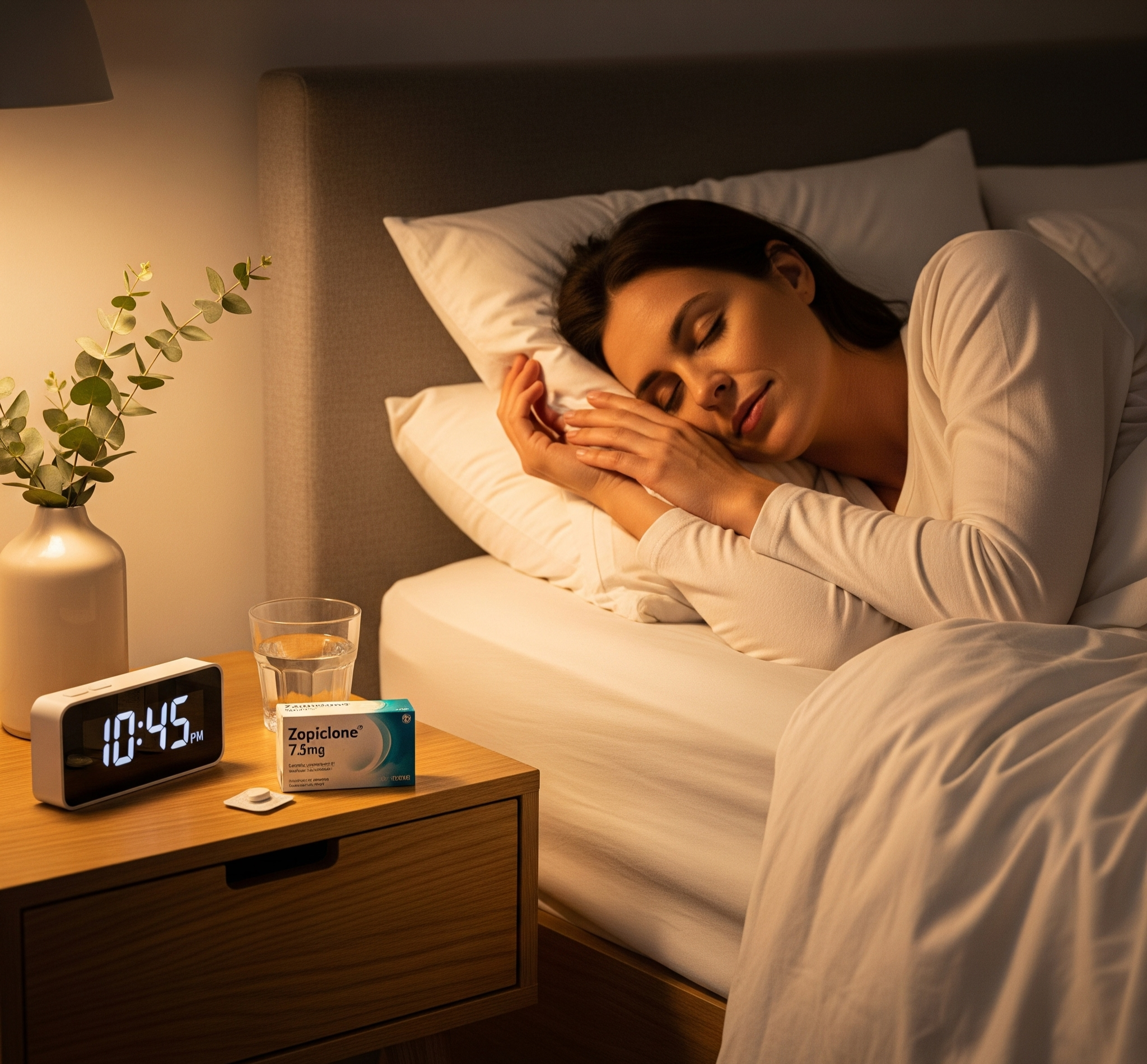
What many patients like about it is that it helps them fall asleep without leaving them feeling like they’ve been hit by a truck the next morning. When you’ve got to be alert for work, drive the kids to school, or operate machinery, that’s not a small consideration.
The medication doesn’t force you into some unnatural sleep state – it’s more like giving your brain permission to do what it’s supposed to do naturally. For people whose minds just won’t quit at bedtime, that can feel like a godsend.
The Reality of Getting Prescribed Sleep Meds in Australia
Let’s be realistic about this process. Australian doctors don’t hand out sleeping pills like lollies, and there are good reasons for that approach.
Most GPs will want to understand what’s really going on before they write you a script. They’ll ask about your sleep history, what’s stressing you out, whether you’ve tried other approaches, what other medications you’re on – the whole nine yards. Sometimes they’ll want to rule out things like sleep apnoea first, because sleeping pills won’t fix a blocked airway and might actually make things worse.
When doctors do prescribe zopiclone, it’s typically for short stints – maybe two to four weeks max. The idea isn’t to put you on them indefinitely, but to break the cycle of chronic sleeplessness while you work on the underlying issues.
Most decent doctors will combine the medication with practical advice about sleep hygiene, stress management, and maybe a referral to a psychologist who specialises in sleep issues. They’re not trying to create customers for life; they’re trying to get you sleeping well without needing pills long-term.
What Actually Happens When You Take It
Alright, let’s talk about the real-world experience. Most people who take zopiclone report falling asleep faster – sometimes within 15-30 minutes rather than lying there for hours. They tend to stay asleep better through the night, which means less of that 3 AM wake-up where your brain decides it’s time to worry about everything at once.
The flow-on effects can be pretty significant. When you’re actually getting restorative sleep, your mood stabilises, your concentration improves, you’re less likely to get sick, and you can handle daily stress without feeling like you’re hanging on by a thread.
But let’s not pretend it’s all sunshine and rainbows. Some people get a metallic taste in their mouth – not pleasant, but not dangerous. Others might feel a bit dizzy or have some memory issues. The more concerning stuff is what happens if you use it for too long – your body can develop tolerance, meaning you need more to get the same effect, and dependence can develop.
That’s why the time limits exist. It’s about getting the benefits without creating bigger problems down the track.
What Else is Out There Besides Pills
Here’s where things get interesting. While zopiclone can be brilliant for short-term relief, the gold standard for long-term insomnia treatment is actually therapy – specifically, Cognitive Behavioural Therapy for Insomnia, or CBT-I as the professionals call it.
CBT-I helps you identify the thoughts and behaviours that are keeping you awake. Maybe you’ve developed this habit of catastrophising about how terrible you’ll feel tomorrow if you don’t sleep. Maybe your bedroom has become associated with stress and worry rather than rest. Maybe your sleep schedule is all over the shop.
The beauty of therapy-based approaches is that once you learn the techniques, they stick around. You’re not dependent on taking something every night, and the improvements often continue long after you finish the program.
Other stuff that helps includes mindfulness meditation (which sounds a bit woo-woo but actually has solid research behind it), progressive muscle relaxation, getting your exercise timing right, and being smarter about caffeine and meal timing.
Many sleep specialists reckon the best approach combines everything – use medication for short-term relief when you’re desperate, learn the psychological techniques for long-term management, and make the lifestyle changes that support good sleep naturally.
Read More: RACGP guidelines for insomnia management in Australian general practice
The Challenge of Distance in Australia
One of the biggest headaches with sleep medicine in Australia is simply geography. If you live in Melbourne or Sydney, you’ve got access to sleep clinics, specialists, psychologists who know about sleep – the whole gamut. But if you’re in Broken Hill or Mount Isa? Good luck with that.
Telehealth has helped bridge some gaps, especially for follow-up appointments and certain types of therapy. You can now access CBT-I programs online, have consultations with specialists via video call, and get ongoing support without travelling hundreds of kilometres.
But some things still need to be done face-to-face. Sleep studies, certain types of assessment, and initial consultations – these often require you to be physically present. For many regional Australians, this means taking time off work, finding accommodation, and dealing with significant expenses just to access basic healthcare.
This makes it even more important for local GPs to feel confident managing common sleep problems. Many have done extra training in sleep medicine, and there are ongoing professional development programs to help ensure that effective treatment is available closer to home.
Where Things Are Heading
The future of sleep medicine looks pretty exciting, actually. We’re getting much better at personalising treatment based on individual differences in genetics, circadian rhythms, and lifestyle factors.
New medications are in development that might offer the benefits of current sleep aids without some of the drawbacks. There’s also growing interest in chronotherapy – working with your individual body clock rather than trying to force everyone into the same sleep schedule.
Technology is playing a bigger role, too. Sleep tracking devices are becoming more sophisticated, and while your Fitbit isn’t going to diagnose sleep apnoea, the data can help both patients and doctors understand patterns and track improvements.
Perhaps most importantly, we’re seeing sleep health integrated into broader healthcare approaches. Mental health professionals routinely ask about sleep. Cardiologists understand the connection between sleep and heart health. Even workplace health programs are starting to address sleep as a productivity and safety issue.
The stigma around sleep problems continues to fade, which means more people are seeking help earlier rather than suffering in silence for years.
Frequently Asked Questions
1. How long can I actually take zopiclone before it becomes a problem?
Most doctors won't prescribe it for more than 2-4 weeks at a stretch. After that, your body starts getting used to it, and you might need higher doses to get the same effect. Some people develop dependence, which is exactly what we're trying to avoid. If you're still having sleep problems after a month, your doctor will want to look at other approaches rather than just continuing the pills indefinitely.
2. Will I be a zombie at work the next day?
Compared to older sleeping pills, zopiclone is less likely to leave you feeling groggy the next morning. But everyone's different – some people are more sensitive than others. Start taking it on a night when you don't have to drive or do anything critical the next day, just to see how you react. If you're still feeling drowsy 8 hours after taking it, talk to your doctor about adjusting the timing or dose.
3. Can I have a beer with dinner if I'm taking zopiclone at bedtime?
Nope, not a good idea. Both alcohol and zopiclone slow down your central nervous system, and combining them can be genuinely dangerous. You could stop breathing properly, or end up so sedated that you can't wake up if there's an emergency. It also makes the medication less effective at actually improving your sleep quality.
4. What happens if the zopiclone stops working for me?
Don't just take more pills on your own – that's how people get into trouble. Ring your doctor and have an honest conversation about what's happening. This might mean you're developing tolerance, or there could be other factors messing with your sleep that need addressing. Sometimes a short break from the medication can reset things, or you might need to try a different approach altogether.
5. I heard grapefruit can mess with sleeping pills – is that true?
Yeah, grapefruit and grapefruit juice can actually increase the amount of zopiclone in your bloodstream, which means stronger side effects and potentially dangerous sedation. It's one of those weird drug interactions that most people don't know about. Same goes for some other medications – always tell your doctor and pharmacist everything you're taking, including supplements and herbal stuff.
6. Can I take zopiclone if I have other health problems?
Depends on what they are. If you've got serious liver problems, breathing issues like severe asthma or sleep apnoea, or a history of drug or alcohol problems, zopiclone might not be suitable. Your doctor needs to know about all your health conditions before prescribing anything. Don't try to hide stuff or downplay problems – it's not about judging you, it's about keeping you safe.
7. What's the real difference between zopiclone and something like Valium for sleep?
Zopiclone is more targeted – it's designed specifically for sleep problems and is less likely to affect you during the day. Valium and similar medications (benzodiazepines) are older drugs that can be effective for sleep but tend to hang around in your system longer, potentially causing next-day drowsiness. Zopiclone also has a lower risk of dependence, though you still need to be careful with it.
The Bottom Line on Sleep Meds
Look, zopiclone and other sleep medications aren’t magic bullets, but they’re valuable tools when used appropriately. For someone trapped in the exhausting cycle of chronic insomnia, they can provide enough relief to break the pattern and create space for other interventions to work.
The key is using them wisely – short-term, under medical supervision, as part of a broader approach that addresses the underlying causes of sleep problems rather than just medicating the symptoms.
If you’re struggling with sleep, the message is simple: effective help exists. Whether that involves medication, therapy, lifestyle changes, or a combination of approaches, you don’t have to resign yourself to a life of exhausted days and restless nights.
The role of Zopiclone tablets in Australia will likely continue evolving as our understanding of sleep medicine grows, but they’ll remain an important option for people who need short-term relief while working toward longer-term solutions.
Don’t suffer in silence. Talk to your doctor, explore your options, and remember that good sleep isn’t a luxury – it’s a necessity for living well.

Author: Darwin
Darwin has spent the better part of a decade writing about sleep problems and the medications used to treat them. Based in Melbourne, he’s become something of a specialist in explaining pharmaceutical information to ordinary Australians who just want a decent night’s rest…Read more